
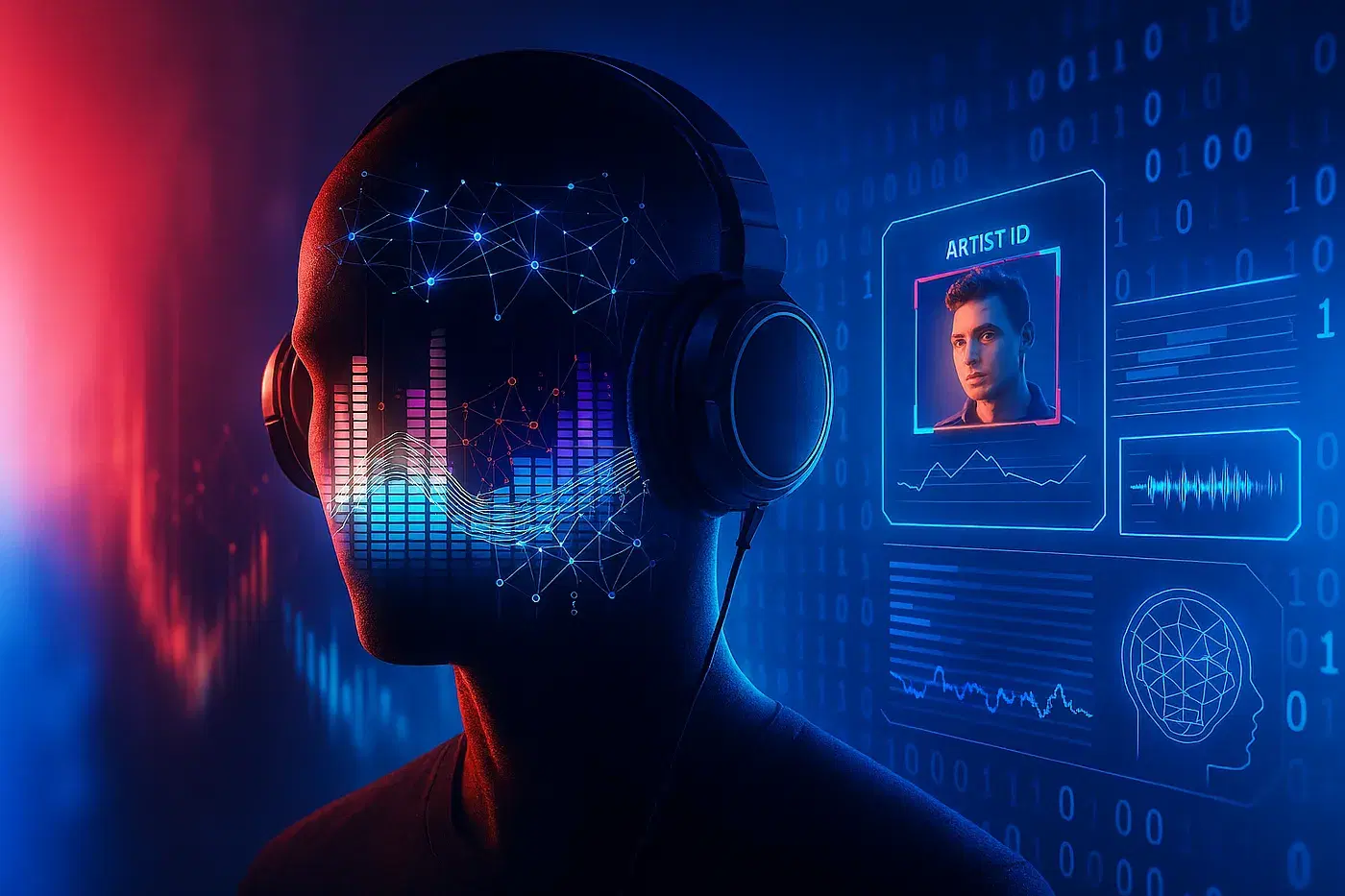
The traditional image of an A&R (Artist & Repertoire) scout sitting through countless live shows in smoky clubs, sifting through demo submissions, and relying on gut instinct to discover the next big star is rapidly becoming a relic of the past. In 2025, artificial intelligence has fundamentally transformed how the music industry identifies, evaluates, and develops new talent. This technological revolution is reshaping the talent discovery landscape for labels, publishers, playlist curators, and artists themselves.
The Evolution of Talent Discovery
To appreciate the magnitude of this shift, it’s worth briefly examining how talent discovery has evolved:
The Traditional A&R Model (1950s-2000s)
For decades, talent discovery followed a relatively consistent pattern:
A&R representatives physically attended shows and industry events
Artists submitted physical demos (later digital) for consideration
Personal networks and word-of-mouth recommendations drove discovery
Decisions relied heavily on subjective taste and intuition
Geographic limitations meant talent in major music cities had significant advantages
This model, while romantic in its human-centered approach, was inherently limited by human capacity, geographic constraints, and unconscious biases. It also created significant bottlenecks, with relatively few gatekeepers determining which artists received development opportunities.
The Early Digital Transition (2000s-2015)
The first wave of digital disruption brought important changes:
Social media metrics began influencing A&R decisions
Early streaming data provided new visibility into independent artist performance
Digital submissions replaced physical demos
Online platforms expanded geographic reach
While this period expanded access and provided new data points, the fundamental approach remained largely reactive and human-driven, with technology serving primarily as a facilitator rather than an active participant in the discovery process.
The AI-Powered Present (2025)
Today’s landscape represents a quantum leap forward:
AI systems continuously monitor millions of tracks across platforms
Predictive algorithms identify promising artists often months before human scouts
Natural language processing analyzes audience sentiment across social platforms
Computer vision evaluates visual branding and performance content
Machine learning models predict commercial potential and audience fit with unprecedented accuracy
This new paradigm doesn’t eliminate human judgment, but it dramatically expands the scope of discovery while providing sophisticated tools to enhance decision-making.
How AI-Powered A&R Works in Practice
The current generation of AI-powered A&R systems operates through several sophisticated mechanisms:
1. Comprehensive Data Integration
Modern systems ingest and analyze data from an unprecedented range of sources:
Streaming Platforms: Track-level performance metrics, skip rates, save rates, playlist additions, and listener behavior patterns
Social Media: Engagement metrics, sentiment analysis, growth rates, and audience demographic information
Live Performance: Ticket sales, venue capacities, attendance trends, and geographic draw
Content Platforms: Video performance metrics, comment sentiment, and sharing patterns
Industry Databases: Publishing information, collaboration networks, and production credits
Consumer Behavior: Merchandise sales, direct-to-fan conversions, and email engagement
This holistic data view allows AI systems to identify promising signals that might be invisible when looking at any single platform in isolation.
2. Pattern Recognition and Predictive Modeling
The core power of AI-powered A&R lies in its ability to identify patterns that predict future success:
Growth Trajectory Analysis: Systems can distinguish between organic growth and artificial spikes, identifying the sustainable momentum patterns that typically precede broader success.
Audience Quality Assessment: Beyond raw numbers, AI evaluates the engagement level and conversion potential of an artist’s audience.
Sonic Analysis: Advanced audio processing can identify tracks with production qualities, hook structures, and compositional elements that correlate with commercial performance.
Comparative Modeling: By identifying “career twins” — artists whose early metrics resemble those of previously successful acts — AI can forecast potential development paths.
“Our system identified an artist with just 15,000 monthly listeners whose engagement patterns were nearly identical to those of an artist who reached 2 million monthly listeners six months later,” explains Maria Chen, Head of Data Science at a major label group. “We signed them immediately, and they’re now approaching 1 million monthly listeners themselves.”
3. Contextual Understanding
Modern AI systems go beyond raw metrics to understand the broader context of an artist’s position:
Genre Evolution Mapping: Systems track the emergence and evolution of micro-genres and sound trends, identifying artists who are well-positioned within emerging waves.
Cultural Relevance Assessment: Natural language processing analyzes how artists are discussed across platforms, identifying those generating authentic cultural conversation.
Network Effect Analysis: AI maps collaboration networks and audience overlap, identifying artists positioned to benefit from strategic relationships.
Market Gap Identification: Systems can identify underserved audience segments and the artists best positioned to reach them.
4. Continuous Learning and Adaptation
Unlike static analytics, today’s AI systems continuously learn and refine their models:
Feedback Loops: Systems track the outcomes of their recommendations, learning from both successes and failures.
Market Adaptation: Models automatically adjust to changing market conditions and consumer behavior shifts.
Customized Algorithms: Each company’s system develops unique “taste” based on its specific historical data and success patterns.
The New Players in Talent Discovery
This technological transformation has created new power centers in talent discovery:
Data-Forward Labels and Publishers
Traditional music companies that have successfully integrated AI capabilities are discovering talent earlier and more efficiently. These organizations typically combine algorithmic discovery with human expertise, using AI to expand their reach and focus human attention where it’s most valuable.
“AI doesn’t make our decisions for us,” notes veteran A&R executive James Wilson. “It dramatically expands our radar and helps us ask better questions. We’re discovering artists we would have missed entirely in the old model, especially those outside major markets or traditional industry networks.”
Tech-Native Music Companies
New entrants built around AI capabilities are challenging established players. These companies often operate with smaller teams and larger artist rosters, using technology to enable more efficient talent development models.
“Our ratio of artists to A&R staff is about 5x the industry average,” explains Sofia Rodriguez, founder of an AI-powered label. “The technology handles the initial discovery and ongoing performance monitoring, allowing our human team to focus exclusively on creative development and strategic growth.”
Platform-Integrated Discovery Systems
Streaming platforms and social networks have developed sophisticated internal systems that power their editorial selections, playlist curation, and recommendation algorithms. These systems increasingly function as de facto A&R operations, identifying promising artists for platform promotion.
“Being featured on major algorithmic playlists is the new radio,” observes music marketing consultant David Chen. “And those decisions are increasingly made by AI systems that are constantly evaluating performance data across the platform.”
Independent AI Tools for Artists
Perhaps most significantly, artists themselves now have access to AI-powered tools that were once available only to major industry players. These tools help independent artists understand their own metrics, identify growth opportunities, and position themselves for discovery.
“I used an AI analytics platform to identify which of my tracks was resonating most with playlist curators,” shares independent artist Maya Johnson. “I then focused my marketing efforts on that track, which eventually caught the attention of several labels. The technology essentially helped me A&R myself.”
The Impact on Artists: New Opportunities and Challenges
This technological transformation creates both opportunities and challenges for artists navigating the 2025 landscape:
Opportunities
Meritocratic Discovery: AI systems can identify promising talent regardless of location, connections, or resources, creating more pathways for artists outside traditional industry centers.
Earlier Recognition: Artists can be discovered at earlier stages of development, often based on signals that would be invisible to human scouts.
Targeted Development: Data-driven insights can help artists make more strategic decisions about their sound, visual identity, and release strategy.
Multiple Paths: The proliferation of discovery systems creates multiple potential pathways to success beyond traditional label signing.
Challenges
Algorithmic Optimization Pressure: Artists may feel pressure to create music that performs well according to algorithmic metrics rather than following their authentic creative vision.
Data Literacy Requirements: Successfully navigating the new landscape requires a level of data literacy that many artists lack.
Signal-to-Noise Ratio: As more artists optimize for algorithmic discovery, standing out becomes increasingly challenging.
Black Box Decision-Making: Many AI systems remain opaque, making it difficult for artists to understand why they are or aren’t being discovered.
Optimizing for AI Discovery: Ethical Strategies for Artists
For artists looking to position themselves effectively in this new landscape, several ethical strategies can improve discovery potential without compromising creative integrity:
1. Strategic Metadata Management
How you categorize and describe your music significantly impacts discovery:
Genre Classification: Be specific but strategic in genre tagging, considering both accuracy and discovery potential.
Descriptive Consistency: Ensure consistent artist name formatting and track information across all platforms.
Comprehensive Credits: Include complete information about writers, producers, and featured artists.
Contextual Keywords: Incorporate relevant descriptive terms that help systems understand your music’s context.
2. Release Strategy Optimization
How you structure your releases can dramatically impact algorithmic performance:
Release Cadence: Maintain a consistent release schedule that builds algorithmic momentum.
Pre-Save Campaigns: Generate early signals that help algorithms identify potential interest.
Strategic Featuring: Collaborate with artists whose audience algorithmic systems might recognize as compatible with yours.
Format Considerations: Consider how different release formats (singles, EPs, albums) impact algorithmic treatment on various platforms.
3. Audience Engagement Cultivation
Algorithms increasingly value quality engagement over raw numbers:
Engagement Prompts: Encourage meaningful interactions that algorithms recognize as indicators of genuine connection.
Community Building: Foster direct relationships with core fans who provide consistent engagement signals.
Platform-Specific Optimization: Understand the specific engagement metrics each platform’s algorithms prioritize.
Authentic Interaction: Focus on genuine audience connection rather than artificial engagement tactics that sophisticated algorithms increasingly recognize and discount.
4. Data-Informed Creative Choices
Use data to inform — not dictate — creative decisions:
Audience Feedback Integration: Use performance data to identify which elements of your work resonate most strongly.
Trend Awareness: Understand current sonic and thematic trends without blindly following them.
Format Experimentation: Test different song structures, lengths, and intro styles to identify what works best for your specific audience.
Release Timing: Use platform analytics to identify when your specific audience is most active and receptive.
The Future: Human-AI Collaboration in Talent Development
As we look toward the latter half of the decade, the most promising model appears to be neither human-only nor AI-only approaches, but sophisticated collaboration between the two. The emerging paradigm combines:
AI systems that excel at pattern recognition, data processing, and identifying non-obvious correlations
Human expertise in creative development, artist psychology, and cultural context
Continuous feedback loops where human decisions inform AI learning and AI insights enhance human judgment
“The future isn’t about AI replacing A&R,” predicts industry veteran and music tech investor Sarah Johnson. “It’s about a new kind of talent development ecosystem where technology handles the computational heavy lifting while humans focus on the creative and interpersonal elements that machines can’t replicate. The best results come from leveraging the strengths of both.”
This collaborative approach is creating more sophisticated, personalized development strategies that consider both data-driven insights and the intangible elements of artistry that resist quantification.
Conclusion: Navigating the New Landscape
The AI transformation of talent discovery represents neither utopia nor dystopia for artists — it’s simply the new reality of the industry in 2025. Understanding how these systems work, what they value, and how to position yourself effectively within them is becoming an essential skill for artists at all career stages.
The most successful artists approach these systems not as mysterious black boxes or enemies of creativity, but as powerful tools that can be understood and navigated strategically. They maintain their creative authenticity while making informed choices about how to present and distribute their work in ways that algorithmic systems can recognize and amplify.
As AI continues to evolve, the relationship between technology and talent discovery will only grow more sophisticated. The artists who thrive will be those who embrace this evolution — not by chasing algorithms at the expense of their artistic vision, but by understanding the new landscape well enough to chart their own path through it.
See Musuni in Action!
Want to understand how your music is performing across platforms and position yourself for discovery by today’s AI-powered industry systems? Watch our platform demo to see how Musuni helps artists optimize their profiles and increase their chances of being discovered:
https://www.youtube.com/watch?v=Bwp6ygwEN7M
Join the Musuni waitlist today at musuni.io and gain the insights you need to navigate the new talent discovery landscape effectively.