
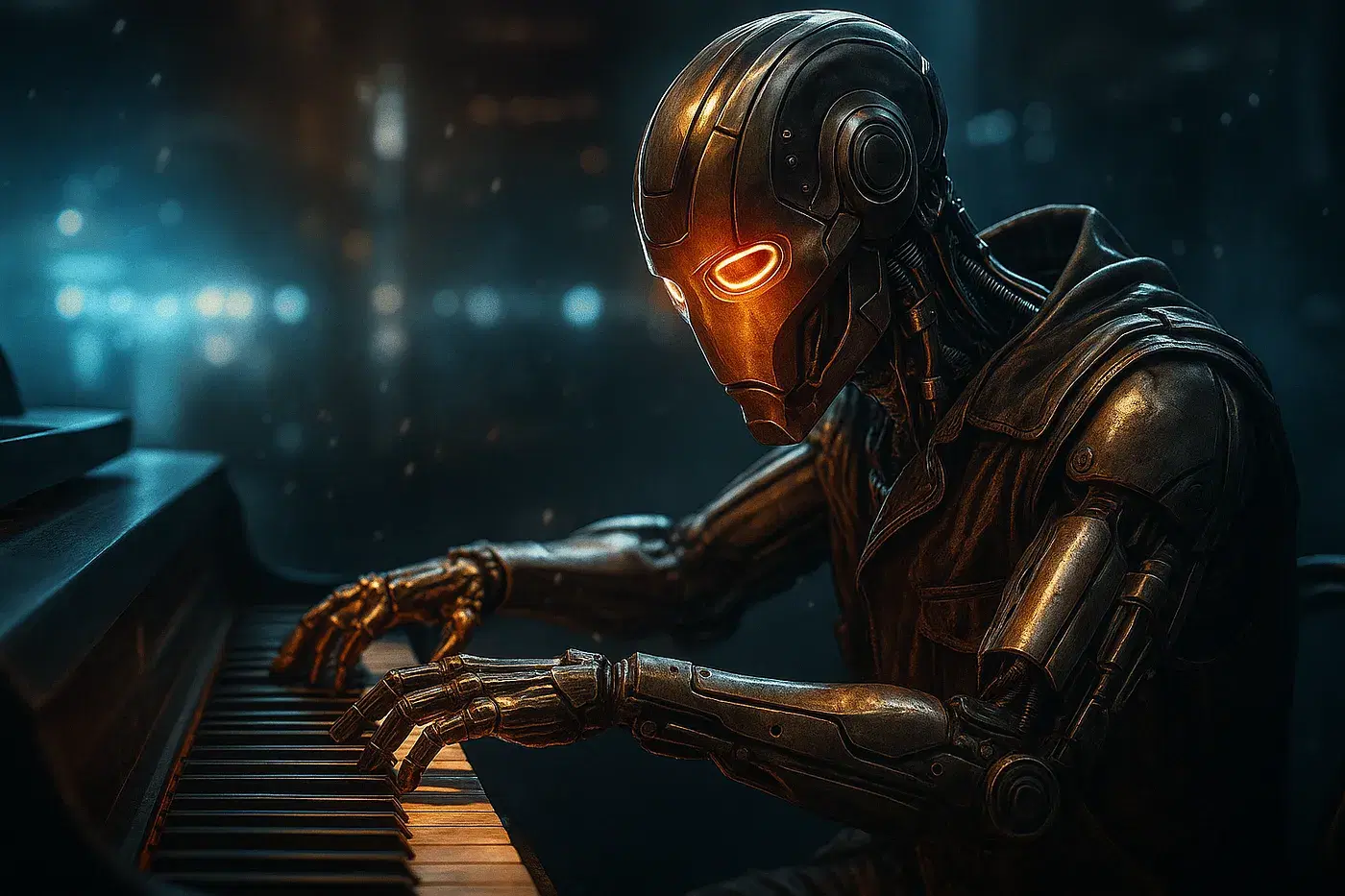
The rise of Artificial Intelligence (AI) is transforming industries across the globe, and music production is no exception. From AI-powered mixing and mastering tools to generative music platforms, the technology is evolving at a breakneck pace. This rapid advancement inevitably sparks debate: Is AI a threat to human creativity and the livelihoods of music producers, or is it a powerful new set of tools that can enhance workflow and unlock new creative possibilities?
For producers and artists navigating this changing landscape, understanding AI’s capabilities and limitations is crucial. Rather than viewing it as an either/or scenario, perhaps the most productive approach is to see AI not as a replacement, but as a potential collaborator or an intelligent assistant.
Fears vs. Reality: What Can AI Actually Do?
The fear often stems from headlines about AI creating entire songs or perfectly mimicking human artists. While generative AI is becoming more sophisticated, it’s important to distinguish between different types of AI tools used in production:
Assisted Mixing/Mastering: Tools like iZotope Ozone or LANDR use AI to analyze audio and suggest settings for EQ, compression, loudness, etc., based on genre targets or reference tracks. They aim to speed up the process and provide objective benchmarks.
Source Separation: AI algorithms can now impressively isolate vocals, drums, bass, and other instruments from a mixed track (e.g., Lalal.ai, Moises.ai). This is useful for remixing, sampling, or creating backing tracks.
Smart EQ/Compression: Plugins that intelligently identify and fix issues like resonance, harshness, or masking, often learning from the audio material.
Generative Music/Idea Starters: Platforms that can generate chord progressions, melodies, drum patterns, or even full instrumental beds based on prompts or parameters (e.g., Amper, AIVA, Google’s MusicLM). These are often used for inspiration or sketching ideas.
AI Synthesis/Modeling: Creating new synthesizer sounds or modeling existing instruments with greater realism or novel characteristics.
While generative AI can create music, it currently lacks the nuanced emotional depth, cultural context, and personal experience that human artists bring. The tools making the biggest impact on professional workflows today are primarily those designed to assist the producer, not replace them.
AI as a Powerful Assistant: Enhancing Workflow
Viewed as an assistant, AI offers significant benefits for music producers:
Speeding Up Tedious Tasks: AI can automate repetitive tasks like cleaning up noise, de-essing vocals, or achieving basic mix balances, freeing up producers to focus on more creative decisions.
Providing Objective Feedback: AI analysis tools (as discussed in the mix feedback post) offer unbiased insights into technical aspects like frequency balance and loudness, helping producers identify blind spots.
Overcoming Creative Blocks: Generative tools can serve as powerful starting points when inspiration is lacking, offering new melodic ideas, chord progressions, or rhythmic patterns to build upon.
Democratizing Production: AI tools can lower the barrier to entry for aspiring producers, providing access to sophisticated processing and analysis that previously required years of experience or expensive gear.
New Creative Possibilities: AI opens doors to entirely new sounds and processing techniques that might be difficult or impossible to achieve manually.
Addressing the Concerns
Legitimate concerns remain:
Homogenization of Sound: Over-reliance on AI presets or suggestions could potentially lead to music sounding more generic if producers don’t apply their own taste and critical judgment.
Copyright & Ownership: The legal landscape surrounding AI-generated music is still evolving. Who owns the copyright when AI plays a significant role in creation?
Devaluation of Skills: There’s a fear that AI tools might devalue the technical skills producers spend years honing.
However, the history of music technology shows that new tools often face initial resistance before becoming integrated into the creative process. Drum machines didn’t replace drummers entirely, and synthesizers didn’t eliminate traditional instruments. Instead, they became new tools in the producer’s toolkit.
The Producer’s Role in the Age of AI
AI is unlikely to replace the core role of the music producer. Taste, artistic vision, emotional judgment, and the ability to guide a project from concept to completion remain uniquely human skills. The producer’s role may evolve to become more curatorial — guiding AI tools, selecting the best outputs, and imbuing the final product with their unique creative signature.
Embracing AI doesn’t mean sacrificing creativity; it means learning to leverage these powerful new tools to work faster, smarter, and potentially explore new sonic territories. The producers who thrive will be those who adapt, learn how to effectively integrate AI into their workflow, and maintain their focus on artistic intent.
Conclusion: Embrace, Adapt, Create
AI in music production is not a binary choice between threat and utopia. It’s a complex evolution presenting both challenges and immense opportunities. By understanding what AI can (and cannot) do, producers can move beyond fear and start exploring how these tools can serve their creative vision. Think of AI as the most knowledgeable, tireless, yet ultimately direction-requiring assistant you’ve ever had.
The future belongs to those who learn to collaborate with technology, using it to enhance their uniquely human creativity.
See Musuni in Action!
Explore how Musuni leverages AI to empower artists and producers. Watch our comprehensive new platform demo:
https://www.youtube.com/watch?v=Bwp6ygwEN7M
Musuni integrates AI not to replace creativity, but to provide intelligent insights and streamline workflows, empowering producers and artists. Sign up on our homepage (musuni.io) to join the beta waitlist and explore the future of music intelligence.