
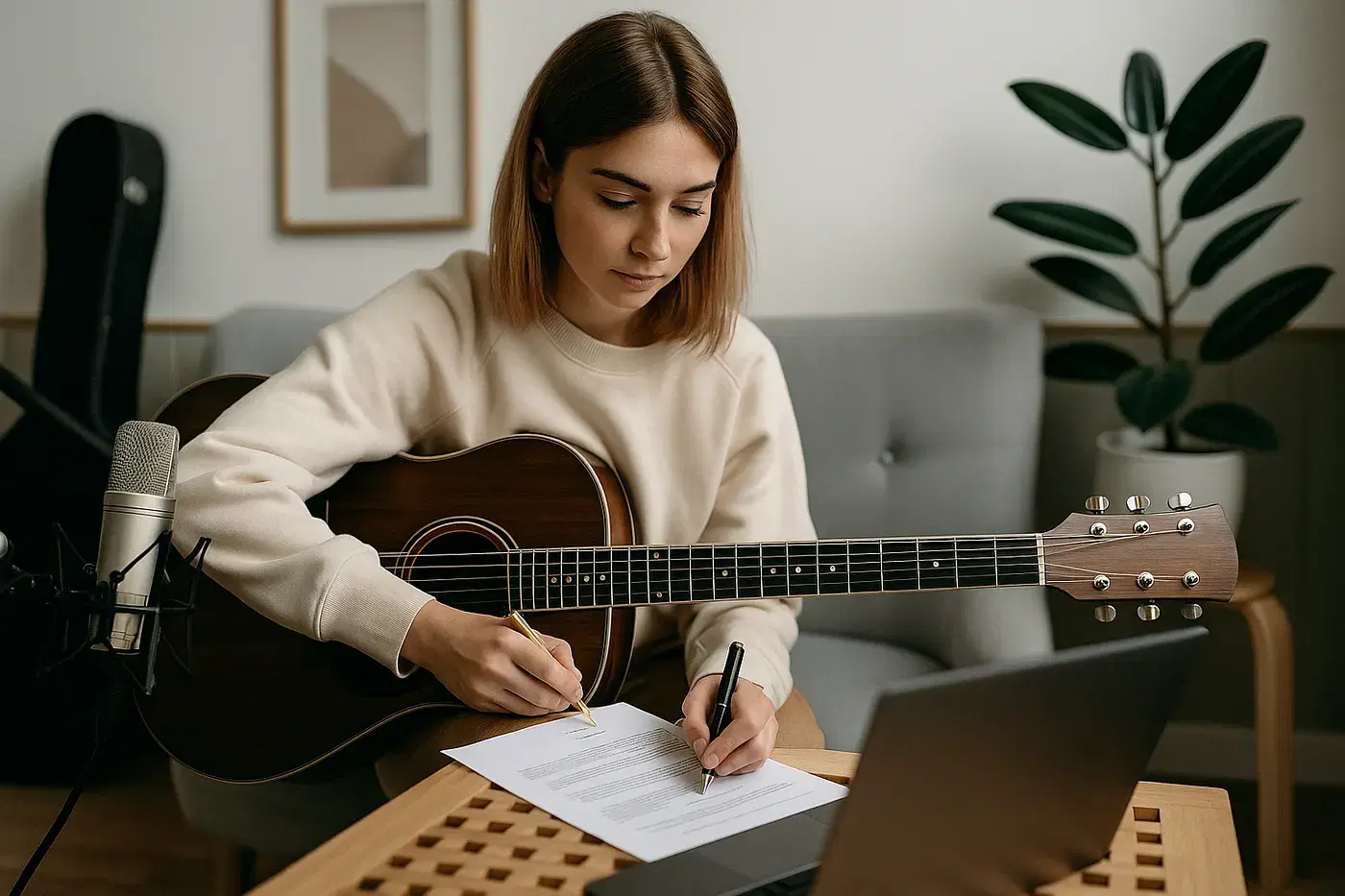
Collaboration is essential in the music industry. Whether you’re co-writing lyrics, featuring a vocalist, working with a producer, or creating a remix, joining forces often leads to exciting creative outcomes. However, the excitement of collaboration can sometimes overshadow the need for clear business agreements. Failing to define terms upfront can lead to misunderstandings, disputes, and even legal battles down the line, potentially damaging relationships and hindering your career.
While formal contracts might seem intimidating, especially when working with friends, having simple, clear agreements in writing is crucial for protecting everyone involved. These agreements don’t need to be overly complex legal documents; often, a straightforward outline of key terms is sufficient to ensure clarity and prevent future headaches. Let’s look at some common collaboration scenarios and the essential elements to include in your agreements.
Co-Writing Agreements (Split Sheets)
As discussed previously, when two or more people contribute to writing the composition (lyrics and melody) of a song, a split sheet is essential.
Purpose: To document the agreed-upon ownership percentage of the composition for each songwriter.
Key Elements:
Song Title & Date
Full Legal Names & Contact Info of All Writers
Performing Rights Organization (PRO) Affiliation (e.g., ASCAP, BMI, SESAC, SOCAN) & Member Number for each writer
Agreed Percentage Share for each writer (Totaling 100%)
Signatures of all writers
When to Create: As soon as the song is considered complete, before registering it with a PRO or releasing it.
Why it Matters: Ensures accurate royalty distribution from PROs and publishers, prevents ownership disputes.
Feature Artist Agreements
When you feature another vocalist or instrumentalist prominently on your track, a feature artist agreement clarifies their role and compensation.
Purpose: To define the terms of the featured artist’s contribution to the sound recording.
Key Elements:
Artist Names & Song Title
Scope of Feature (e.g., one verse, chorus vocals, guitar solo)
Compensation: Flat fee? Royalty points (percentage of sound recording income)? A combination?
Credit/Billing: How will the feature be credited (e.g., “Artist A feat. Artist B”)?
Approval Rights: Does the featured artist have approval over the final mix or use of their performance?
Ownership: Typically, the main artist retains ownership of the master recording, but this should be stated.
Usage Rights: Can the main artist use the featured artist’s name and likeness for promotion?
When to Create: Before the recording session.
Why it Matters: Avoids disputes over payment, credit, and how the featured performance can be used.
Producer Agreements
When working with a producer who shapes the sound recording, a producer agreement is vital.
Purpose: To define the producer’s services, compensation, and rights related to the sound recording.
Key Elements:
Artist & Producer Names, Song(s) Title(s)
Producer’s Services (e.g., recording, mixing, arranging)
Compensation: Flat fee? Royalty points (and how they’re calculated — percentage of net receipts, specific deductions)? Advance against points?
Payment Schedule
Delivery Requirements (e.g., final mixed master files)
Credit: How will the producer be credited?
Ownership of Masters: Typically owned by the artist, especially if paying a fee, but points imply a share of income.
Approval & Revision Process
When to Create: Before starting the production process.
Why it Matters: Clarifies payment obligations, ownership, and creative control, preventing costly misunderstandings.
Remix Agreements
If you’re remixing another artist’s track, or commissioning a remix of your own, a remix agreement is needed.
Purpose: To grant permission to create a derivative work (the remix) and define the terms.
Key Elements:
Original Artist & Remixer Names, Original Song Title
Scope of Remix: What elements can the remixer use? Are there specific creative directions?
Compensation: Flat fee to the remixer? Share of remix income? No fee (remixing for exposure)?
Ownership: Typically, the original artist retains ownership of the underlying composition and the remix master, granting the remixer specific usage rights.
Approval Rights: Does the original artist have approval over the final remix?
Usage Rights: How can the remix be released and promoted? Can the remixer use it in their DJ sets?
When to Create: Before the remix work begins.
Why it Matters: Ensures proper permissions are granted, defines payment, and clarifies ownership and usage rights for the new version.
Keep it Simple, Keep it Clear
These agreements don’t always require expensive lawyers, especially for independent artists starting out. Many templates are available online (search for “music split sheet template,” “feature artist agreement template,” etc.). The most important thing is to clearly discuss and document the key terms before the collaboration deepens or the music is released.
Having these conversations upfront might feel awkward initially, but it demonstrates professionalism and respect for everyone’s contributions. Clear agreements build trust and provide a solid foundation for successful, long-lasting creative partnerships.
Conclusion: Protect Your Partnerships
Don’t let assumptions or informal understandings jeopardize your collaborations. Take the time to discuss ownership, compensation, credit, and usage rights openly and honestly. Document your agreements clearly, even if it’s just a simple signed sheet or confirmed email outlining the key points. Protecting yourself and your collaborators legally allows you to focus on what matters most — making great music together.
See Musuni in Action!
Learn how Musuni can assist in managing collaboration details. Watch our comprehensive new platform demo: https://www.youtube.com/watch?v=Bwp6ygwEN7M
Managing collaboration details and agreements can be part of a streamlined workflow. Musuni aims to help artists organize their projects and collaborations. Sign up on our homepage (musuni.io) to join the beta waitlist.