
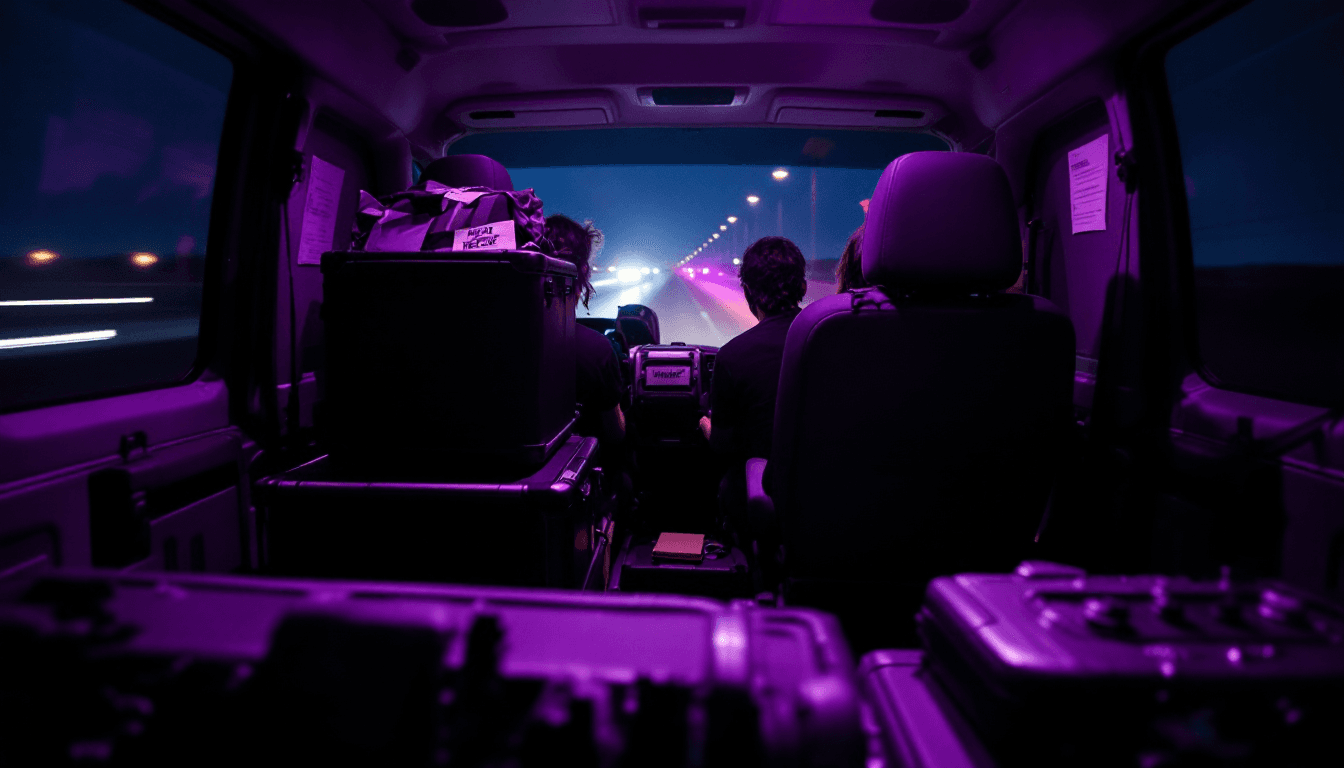
You're loading the van at 1 a.m. in a town three hours from home. The show was great. Forty people came for the headliner, and by the third song, they were watching you. Somebody bought a shirt. A guy at the bar said you were the best band he'd seen all year.
You drive home happy. The next morning you check your followers. No change. Your streams look the same as last week.
Those forty people loved it. And not one of them has any way to find you again.
In the Musuni artist quiz, we call this type the Road Warrior. You earn fans one room at a time, and once someone sees you live, they're yours. Your blind spot is that you count shows as progress. You can play 80 gigs and walk away with no emails, no footage and no recording that captures what happens in the room.
And pride in the grind can turn into burnout you won't admit to.
How your fans relate to you
Road Warrior fans are witnesses. They saw you on a Tuesday in a half-full room, something turned, and now they tell people "you have to see them live."
Their loyalty is built on a night they shared with you. So they buy at the merch table, and they bring friends next time.
Most of them never find you online first. They find you in a room, then look you up on the way home. That's the moment that matters, and it's the moment most Road Warriors leave to chance.
Artists like Bruce Springsteen, King Gizzard & the Lizard Wizard and Turnstile show the pattern: reputations built on what happens in the room, and fans who talk about the shows as much as the records.
What to post: bring the room to the feed
Your content problem isn't ideas. It's that nobody is filming. Ask one friend to film every show from the crowd, and these lanes take care of themselves.
1. The moment the room turns. Fifteen to 30 seconds filmed from the crowd, right when the set catches. The half-empty room filling in, the crowd starting to move. That's your whole pitch in one clip.
2. Tour diary, day X. One clip a day from the road: the drive, the load-in, the green room, the show. Number the days. People follow a run like a story.
3. They sang it back. Point the camera at the room during the chorus and let the crowd carry it. Nothing sells a show like proof that people know the words.
4. One song, three cities. The same song from three different shows, cut together. It shows you're playing everywhere, and it shows the song works in every room.
5. Honest show call. Announce the next show with its real size over live footage: "80 capacity, come fill it." An honest number makes people want to help. A vague "huge show" makes them scroll.
Post the best 20 seconds within 24 hours of the show. The people who were there will share it while the night is still fresh.
How to release: live first
Road-test songs on stage before you record them, so you know which ones land. The crowd will tell you which chorus deserves the studio money.
Release live versions alongside studio ones. The live take is often what your fans fell for.
Wrap each single in a run of shows, and play it every night that week. Your release plan and your show calendar should be the same calendar.
Shows and collabs
The stage is your core: tight sets, strong openers and closers, real crowd work.
Opening slots, show swaps with bands in other towns and short runs are how you grow. A show swap is simple: you book them a night in your town, they book you one in theirs, and each band brings a room the other couldn't reach.
Touring together is how you collab best. Your best matches are a Scene Builder, who books the right room and fills it, and a Sound Architect, who can capture your live energy on a record people can take home.
Where the money is
Tickets and merch are your engine, and the merch table is your best store.
House concerts, opening slots, session and side work and private events fill the gaps.
Count your money per show: tickets, merch, costs and gas. Some shows build you and some only drain you, and only the numbers will tell you which is which. Keep the ones that build.
The same goes for where you play. The Read is a free one-page read of your streaming numbers, and it can show you where your listeners already are, which is a much better way to pick your next town than a guess.
Your first 30 days
Put a sign-up (a QR code to your email or text list) on stage and at merch at every show, starting with the next one.
Ask one friend to film every show from the crowd. Post the best 20 seconds within 24 hours.
Set up a show swap with an artist in a town 1 to 3 hours away.
Record one live session properly, even 3 songs, so people who can't come can still feel it.
Track three numbers per show: people in the room, sign-ups and merch dollars. Drop the shows that cost you money and give you nothing.
Step one is the big one. Say it from the stage, once, near the end of the set when the room is warmest: "If tonight meant something, scan this and I'll tell you when we're back." Then point at it.
What to focus on, by stage
Just starting. Get one recorded song out before your next run, so people who loved the set have something to find.
Under 1K monthly listeners. Every show is a chance to meet your first 100 fans. Don't let one of them leave without a way to find you.
1K to 10K. Use your list to plan shows: play where your sign-ups and listeners already are.
10K and up. Turn your list into presales and fuller rooms, and grow merch per head, not only head count.
Make the night keep working
You already do the hardest part. You win rooms. Most artists can't.
The rest is making sure the night doesn't end when you load out. A QR code, a friend with a phone and three numbers in a notebook. That's how 80 shows become a fanbase instead of a memory.
Not sure this is you? Take the 2-minute quiz. If it is, read the full Road Warrior profile for your strengths, your blind spot and how your streak shapes what people take home from the room.