
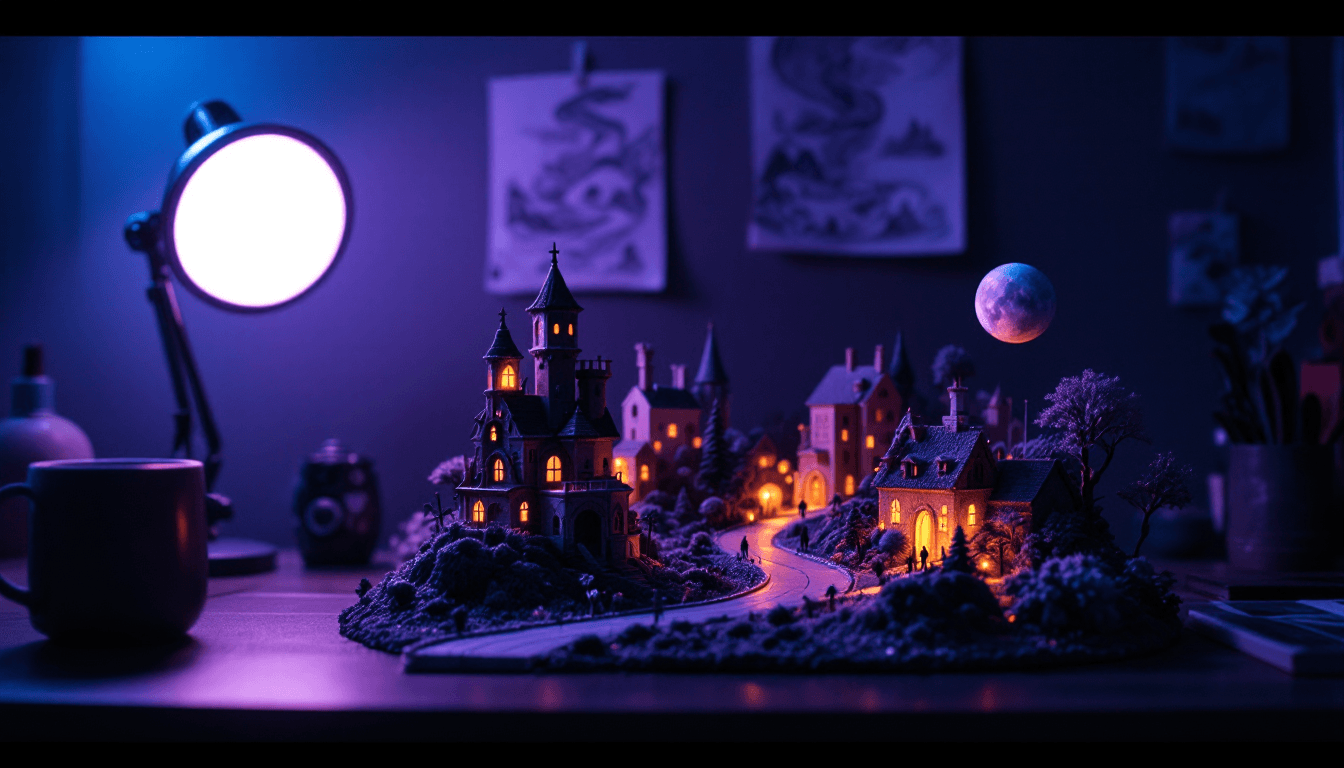
You have a color palette. Three symbols that mean something specific. A mask, or a character, or a city your songs take place in. Maybe a document that explains all of it.
Last week you posted the first teaser: a slow pan across one of the symbols, no music, a cryptic caption. It got 31 views, and two of them were your friends.
It isn't that the world is bad. It might be great. It's that nobody has a reason to care about it yet, because nobody has heard the song.
In the Musuni artist quiz, we call this type the Worldbuilder. You don't drop songs. You open doors into a world with its own rules, colors and secrets. Your blind spot is that the world can turn into a wall. Lore nobody has a reason to care about yet is homework, not mystery.
And mystique is a comfortable place to hide. If nobody really sees you, nobody can turn you down. The song has to earn the world.
How your fans relate to you
Worldbuilder fans are initiates. They don't just listen, they decode. They notice the symbol in the corner of the cover, build theories in the comments and explain you to each other, which does more for you than any ad.
The ones who get in deep collect everything you make. Every print, every variant, every hidden thing.
But the song has to pull them through the door first. Nobody studies a world they haven't been given a reason to enter.
Artists like Gorillaz, Daft Punk and Sleep Token show the pattern: a world people recognize from a single frame, with music that gives strangers a reason to step inside. The look gets attention. The songs are why people stay to decode it.
What to post: five lanes, all with the song in them
The one rule across every lane: at least 5 seconds of music in every post. No silent teasers. No mood boards without sound.
1. Clue drops. One symbol, image or line from the next release, with the song under it. Number them: "Clue 3 of 7." Numbering tells people this is a hunt, and hunts get followed.
2. Artifacts from the world. Show an object that belongs in your world while the music plays. A handwritten letter from a character. A hand-drawn map. A prop from the cover shoot. Hold it to the camera like evidence.
3. The recurring character. One figure, mask or setting that shows up in every video, so a stranger can spot you mid-scroll. If someone sees three of your videos in a month, the third one should feel familiar before the sound even starts.
4. Making the world. Behind the scenes on a cover, costume or set piece, shown as craft. Don't explain what it means. People love watching a mask get painted. They don't need the footnotes.
5. The payoff. On release day, close the loop. Show how the clues fit together, then play the song. The people who followed all seven clues get rewarded, and they'll be the first ones explaining it in the comments.
How to release: eras, not singles
You already think in eras. Lean into it.
Each era gets its own colors, symbols and rules. Every single inside it gets a staged three-week rollout with clues that actually resolve on release day. If the clues don't pay off, people stop playing along next time.
Put the song in the clues from the start, a few seconds at a time. By release day, the hook should already feel familiar.
Close each era with something physical and numbered. Then end it on purpose. A clean ending makes the next era feel like news instead of a rebrand.
Before you build a whole era around a single, it helps to know whether strangers are actually sticking with your songs. The Read is a free one-page read of your streaming numbers, and it can show you whether the music is pulling people in before you spend a month on visuals.
Shows and collabs
Your live show is a set, not a gig. Lighting, costume and a running story matter more than room size. A 60-person room you've transformed beats a big room you can't touch.
Collab with visual artists, designers and costume makers as much as with musicians. They're part of the band whether they're credited that way or not.
On the music side, your best matches are a Sound Architect, who makes your world sound as detailed as it looks, and a Romantic, who gives it a feeling people can fall into.
Where the money is
Your fans pay for objects and access.
Numbered limited editions. Art prints. Physical releases with something hidden inside. A paid fan space where the lore lives and the theorists gather.
Small and scarce suits you. 25 copies that sell out do more for the world than 500 that sit in a box under your bed. Scarcity is part of the story you're telling.
Visual and design work for other artists is a real side lane too. It pays, and it keeps your eye sharp between eras.
Your first 30 days
Lead with the song. Every post about your world includes at least 5 seconds of music, starting today.
Write a one-page world bible: 3 colors, 3 symbols, 1 rule. Everything you post this month follows it.
Run a three-week clue rollout for one single, with a payoff fans can actually find on release day.
Open one place for the people who want to theorize: a group chat, a channel or a broadcast list.
Make one limited object, like 25 numbered prints or lyric cards, and offer it to the people in that space first.
Notice what's missing from that list: building more lore. You probably have enough. What you need now is people inside it.
What to focus on, by stage
Just starting. Finish and release one song before you build anything else. The world can start small and grow around real music.
Under 1K monthly listeners. Cut the lore down to one symbol and one color, and put the song in front of strangers every week.
1K to 10K. You have enough people watching for a real rollout. Run the clue system and gather the theorists in one place.
10K and up. Your world can start paying for itself: limited physical runs, a paid fan space and staged shows.
Open the door first
The best worlds in music didn't start with a 40-page bible. They started with a song good enough that people wanted to know more.
So keep the world. Just put a door in it, and make the song the handle.
Not sure this is you? Take the 2-minute quiz. If it is, read the full Worldbuilder profile for your strengths, your blind spot and how your streak shapes your next era.